
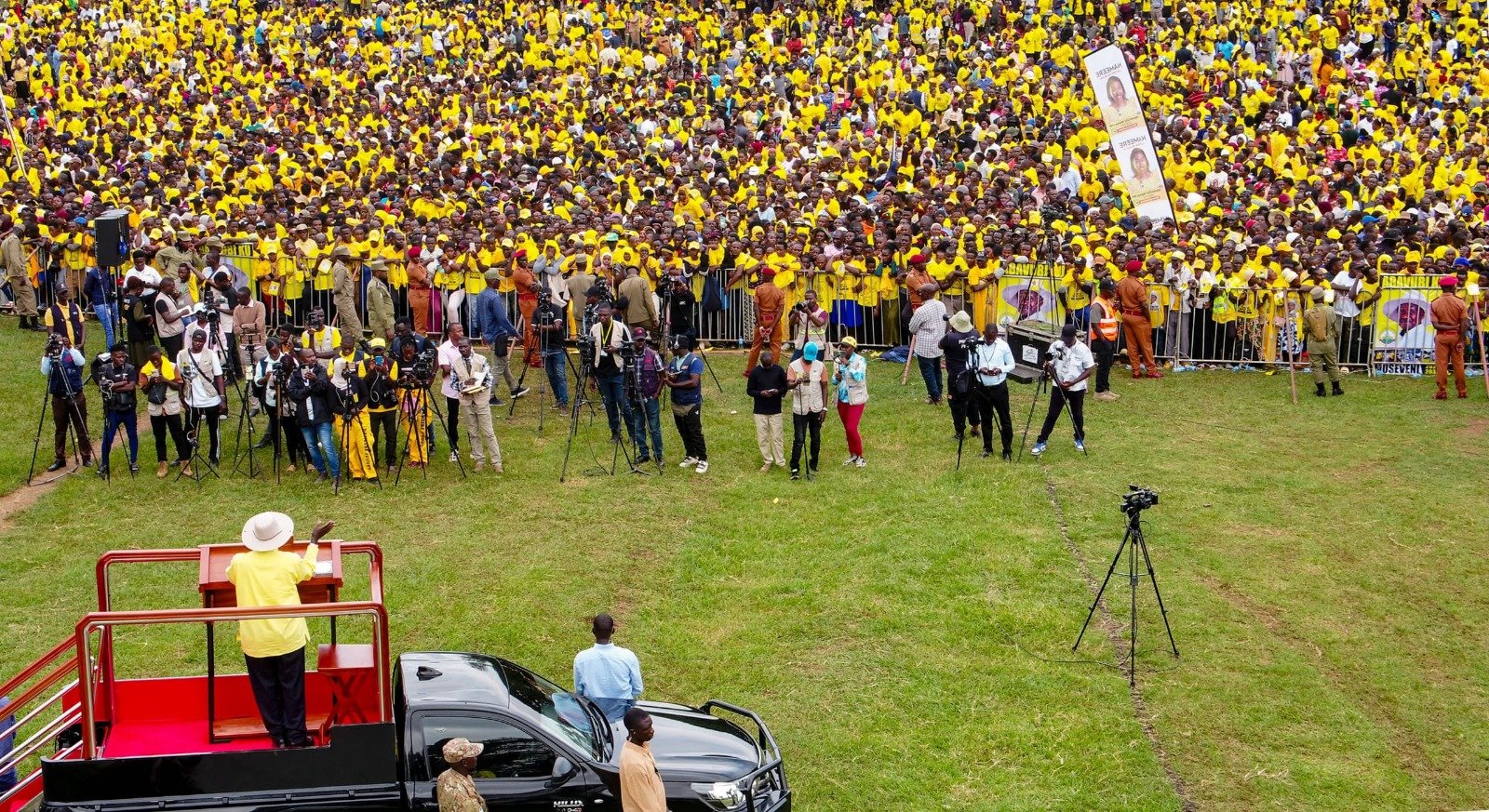
Museveni Holds First Rally in Masaka, Highlights NRM’s Role in Securing Peace and Development in Uganda

President Yoweri Kaguta Museveni, together with the leadership of the National Resistance Movement (NRM), held his first major political rally in Masaka at the historic Liberation Square, a site deeply rooted in Uganda’s struggle for peace and stability.
Speaking to a large crowd, President Museveni described the square as a symbol of the liberation struggle, recalling that it once served as a custody site for fighting equipment during the bush war. He emphasized that the peace currently enjoyed in Uganda was not accidental, but the result of deliberate sacrifices made by the NRM after decades of political instability.
NRM’s Historical Struggle for Peace
Museveni reminded the audience that Uganda suffered prolonged instability, particularly after the 1966 and 1971 crises, which plunged the country into chaos. According to him, it was the NRM that eventually secured lasting peace, laying the foundation for national recovery and development.
He traced the origins of the movement back to 1965, when it began as a student-led initiative involving colleagues such as Dr. Ruhakana Rugunda, Eriya Kategaya, and others. Dissatisfied with political parties lacking a clear vision, the group later formed the NRM, driven by a mission to restore order, unity, and progress.
Peace as a Catalyst for Development
The President stressed that peace has enabled the government to support key national institutions, including St. Henry’s College Kitovu in Masaka. He cited the intervention that followed concerns raised by Fr. Mugabo, the school’s head teacher, as an example of how stability allows the state to respond effectively to citizens’ needs.
Museveni noted that without peace, such investments in education, health, and infrastructure would not be possible.
Call for Responsible Leadership and Voting
Addressing political representation, Museveni urged Members of Parliament to genuinely represent the interests of the people, rather than personal or partisan agendas. He also called on citizens to vote wisely, emphasizing that leadership choices directly affect peace, development, and service delivery.
“Democracy only works when leaders remain accountable to the people who elect them,” he said.
Boosting Agricultural Productivity in Masaka
The President praised Masaka’s success in coffee farming, recognizing it as a key contributor to both local livelihoods and national exports. However, he encouraged farmers to embrace irrigation systems to increase productivity, reduce dependence on rainfall, and strengthen resilience against climate change.
According to Museveni, modern agriculture, supported by irrigation and technology, is essential for sustaining economic growth and improving household incomes.
Museveni’s rally in Masaka reinforced the NRM’s narrative that peace is the foundation of Uganda’s stability and development. By linking historical struggle, political leadership, education, and agriculture, the President reiterated his message that safeguarding peace remains central to Uganda’s future progress.
Joshmishumbi