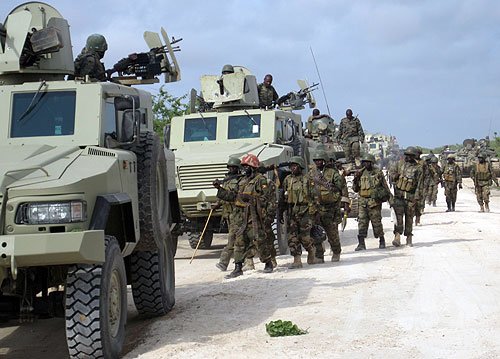

The Uganda People’s Defence Force (UPDF) has deployed armoured vehicles and infantry units in and around key urban centers ahead of Uganda’s upcoming presidential election, raising concerns among opposition groups, civil society organizations, and international observers.
The military presence, officially described by authorities as a preventive security measure, comes amid heightened political tensions as the country prepares for a high-stakes vote that could shape Uganda’s political future.
Heavy Military Presence Ahead of Polls
Witnesses in the capital Kampala and several regional towns report seeing armoured personnel carriers, military trucks, and fully equipped soldiers positioned near major roads, government buildings, and strategic infrastructure.
According to UPDF spokespersons, the deployment is intended to maintain law and order, prevent election-related violence, and protect citizens and electoral institutions. Military officials insist the army remains neutral and professional, acting only in support of civilian authorities.
However, opposition leaders argue that the visible military buildup risks intimidating voters and undermining the credibility of the electoral process.
Opposition and Civil Society Raise Concerns
Several opposition parties and human rights organizations have expressed alarm over the deployment, warning that the use of military force during an electoral period could restrict political freedoms, including freedom of assembly and expression.
“The presence of armoured vehicles on city streets sends a chilling message to voters,” said one opposition figure, calling for security responsibilities to remain primarily with the police rather than the army.
Local civil society groups have urged the government to scale back military involvement and ensure that elections are conducted in a transparent, peaceful, and civilian-led manner.
Government Justification and Security Narrative
The Ugandan government has defended the deployment, citing past incidents of election-related unrest, protests, and sporadic violence. Officials argue that early deployment helps deter chaos and reassures citizens that security forces are prepared to respond swiftly to any disturbances.
President Yoweri Museveni, who has ruled Uganda for decades and is seeking another term, has repeatedly emphasized the need for stability and security during elections, portraying military preparedness as a safeguard against disorder.
International Scrutiny and Democratic Standards
Uganda’s elections have historically attracted international scrutiny, with observers often raising concerns about the role of security forces, media restrictions, and the treatment of opposition candidates.
Diplomatic missions and international organizations are closely monitoring developments, stressing the importance of free, fair, and peaceful elections in line with regional and international democratic standards.
Analysts warn that an overt military presence could damage Uganda’s international image and fuel post-election disputes if the results are contested.
What Comes Next
As election day approaches, attention will focus on:
-
Whether the UPDF maintains or expands its deployment
-
How security forces interact with civilians and political actors
-
The ability of the Electoral Commission to operate independently
-
The overall impact on voter turnout and public confidence
The coming days will be critical in determining whether Uganda’s election proceeds peacefully — or whether security concerns overshadow the democratic process.
The deployment of armoured vehicles and infantry by the UPDF ahead of Uganda’s presidential election underscores the tense political climate surrounding the vote. While authorities frame the move as a security precaution, critics fear it may undermine democratic freedoms.
As Ugandans prepare to cast their ballots, the balance between security and democracy remains at the center of national and international attention.
joshmishumbi