DRC: The White House Announces a New Meeting Between Congolese President Félix Tshisekedi and Rwandan President Paul Kagame

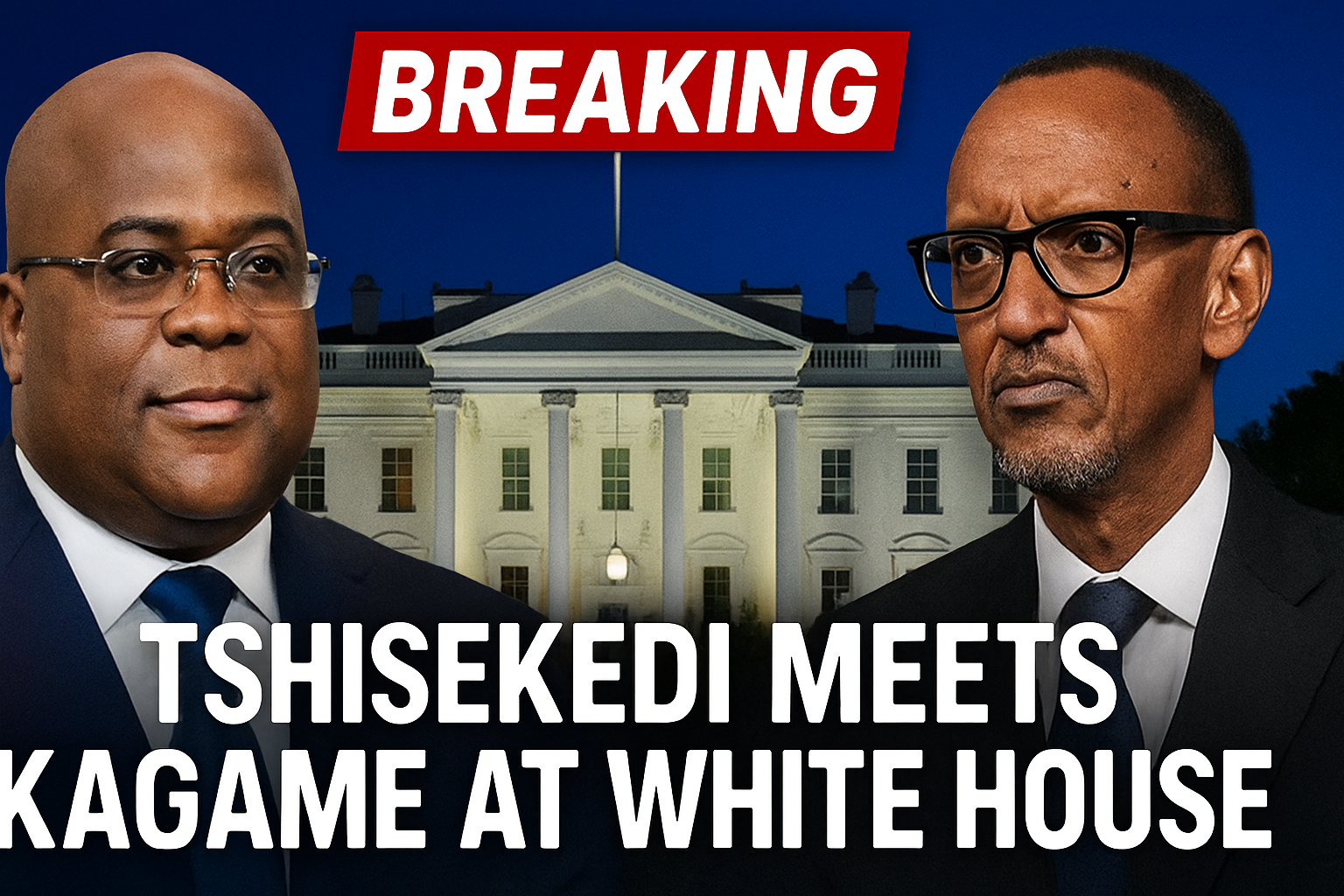
The White House has confirmed that a new high-level meeting between Congolese President Félix Antoine Tshisekedi Tshilombo and Rwandan President Paul Kagame will take place in the coming days, following an invitation extended by U.S. President Donald Trump.
According to US_SrAdvisorAF, who provided an initial briefing, the encounter aims to address rising tensions in the Great Lakes region and explore pathways toward a sustainable diplomatic solution.
This upcoming discussion marks a significant moment in the complex relationship between the Democratic Republic of Congo (DRC) and Rwanda, two neighboring countries whose history is marked by cooperation, mistrust, and recurrent security crises.
A Critical Meeting in a Time of Escalating Tensions
Relations between Kinshasa and Kigali have significantly deteriorated in recent years, largely due to ongoing violence in eastern DRC and accusations of Rwandan support for the M23/AFC rebel movement. The Congolese government has repeatedly condemned Rwanda for violating its territorial integrity and contributing to instability in North Kivu. Kigali, for its part, claims to be concerned about the presence of hostile militias operating near its borders.
Against this backdrop, Washington’s renewed involvement signals the United States’ desire to reassert influence in the region amid shifting geopolitical dynamics.
Why the United States Is Intervening Now
President Donald Trump’s invitation suggests that Washington views the Great Lakes crisis as a global security issue rather than a purely regional dispute. Several strategic motivations appear to be at play:
1. Preventing Regional Escalation
With the conflict in eastern Congo intensifying, there is a growing fear that continued hostilities could destabilize neighboring countries, disrupt trade corridors, and generate a humanitarian crisis of continental scale.
2. Countering Competing Influence
The region has seen increasing diplomatic engagement from China, the European Union, and Gulf states. The U.S. may be seeking to re-establish itself as a central mediator in African security matters.
3. Protecting Critical Mineral Supply Chains
The DRC is one of the world’s leading suppliers of cobalt, coltan, and other critical minerals used in defense technologies and electric vehicles. Instability in mining regions has direct implications for U.S. strategic industries.
What Tshisekedi Hopes to Achieve
For President Tshisekedi, the meeting represents both a diplomatic opportunity and a political test.
1. International Legitimacy
By participating at the White House, Tshisekedi demonstrates his willingness to engage in peace-building and strengthens his international standing.
2. Pressure on Rwanda
Kinshasa expects the U.S. to pressure Kigali to withdraw support for armed groups and respect the sovereignty of the DRC.
3. A Path Toward Peace in Eastern Congo
Securing international guarantees, a ceasefire framework, or even an American commitment to monitoring regional agreements could be decisive steps toward stabilizing the region.
What Kagame Wants from This Dialogue
President Kagame enters the meeting with clear strategic goals:
1. Diplomatic Rebalancing
Kigali seeks to counter accusations of aggression and present itself as a rational and reliable partner in regional security issues.
2. Security Assurances
Rwanda insists that the presence of hostile militias, including the FDLR, remains a threat. Kagame may push for stronger regional cooperation mechanisms.
3. A Reset With Washington
The meeting offers Rwanda a chance to re-align its ties with the U.S., which have fluctuated in recent years due to human rights concerns.
Can Washington Really Solve the Crisis?
While international pressure can help create momentum, long-term peace will require commitments from both Kigali and Kinshasa. Analysts caution that the U.S. can facilitate dialogue, but cannot impose a solution.
Key challenges remain:
-
The deep distrust between the two presidents
-
The continued activity of dozens of armed groups in eastern Congo
-
The economic interests intertwined with the conflict
-
The lack of a unified regional security framework
Still, even a modest breakthroughsuch as agreements on border de-escalation or humanitarian corridorswould be viewed as progress.
A Meeting That Could Reshape Regional Diplomacy
This anticipated encounter under U.S. mediation is more than a bilateral discussion. It represents:
-
a potential reset in DRC-Rwanda relations,
-
a test of U.S. influence under President Trump,
-
and a rare opening for constructive dialogue in one of Africa’s most volatile regions.
As US_SrAdvisorAF indicated, expectations are high. Whether Tshisekedi and Kagame will move closer to resolving their differences remains uncertain, but the international community will be watching closely.