National Sovereignty at Stake: John Ngulevo’s Critical Analysis of the DRC–Rwanda Agreement

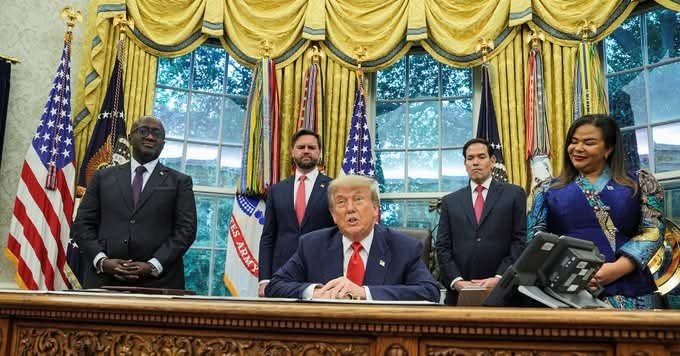
On the eve of the signing of the peace agreement between the Democratic Republic of Congo and Rwanda, scheduled for Thursday, December 4, 2025, in Washington, reactions are multiplying within Congolese public opinion.
Among them, John Ngulevo Emmanuel, a political science student at the Catholic University of Graben (UCG), delivers a clear, critical and nuanced analysis of this diplomatic engagement.

According to him, the agreement comes at a time when the DRC is facing an extremely alarming political, security and humanitarian context.
The country is confronted with the war of aggression led by the AFC–M23, massacres attributed to the ADF, and a humanitarian crisis marked by a growing number of internally displaced persons.
For the analyst, these realities reflect the magnitude of the crisis that has shaken the Great Lakes region for more than three decades, involving notably the DRC, Rwanda, Uganda, Burundi and Tanzania.
Key Points of the Agreement
Regarding the content of the agreement, John Ngulevo Emmanuel highlights several major provisions: respect for territorial integrity and cessation of hostilities; disengagement and disarmament of armed groups; the establishment of a joint security coordination mechanism between Kinshasa and Kigali; support for refugees and internally displaced persons; assistance from MONUSCO and multilateral partners; regional economic integration; and mechanisms for dispute resolution. The agreement is set to enter into force immediately upon its official signing.
However, the student remains cautious about the immediate impact of the agreement on the security situation. He recalls that previous agreements have been signed without producing any tangible results on the ground.
For him, the hope for lasting peace will depend essentially on the goodwill of the parties. He also emphasizes that behind security-related discourse, economic interests remain at the core of the issues.
The International Dimension
On the international scene, the analyst notes increased involvement from foreign powers, with the United States at the forefront as the host country of the signing ceremony.
He also mentions parallel negotiations held in Qatar between the DRC and the AFC–M23, as well as the role of the United Nations, which is demanding the withdrawal of foreign forces from Congolese territory.
National Sovereignty and Inclusivity
Regarding national sovereignty, John Ngulevo believes that the agreement presents both opportunities and risks. While it may help strengthen state authority across the country, it also includes concessions that may be perceived as a partial weakening of that sovereignty.
His main reservation concerns the lack of inclusivity in the process. He regrets the absence of a genuine national dialogue among Congolese to analyze the root causes of the crisis.
He welcomes the criticisms raised by some opposition figures, including Dr. Denis Mukwege, as well as members of Martin Fayulu’s and Moïse Katumbi’s camps, who call for considering internal realities before any international negotiation.
The Situation on the Ground
Yet, just days before the signing, tensions remain high in eastern DRC. Fighting between M23 rebels and Congolese forces, alongside the Wazalendo, occurred on Wednesday, December 3, 2025, in the villages of Katogota and Kamanyola in South Kivu.
These violent clashes caused casualties and triggered massive population displacements, with some fleeing to Rwanda.
Maua Grace