Donald Trump on the Washington Peace Deal and Congo’s Strategic Minerals

Donald Trump Claims He Ended the RDC–Rwanda War and Says the U.S. Will Take Congo’s Minerals
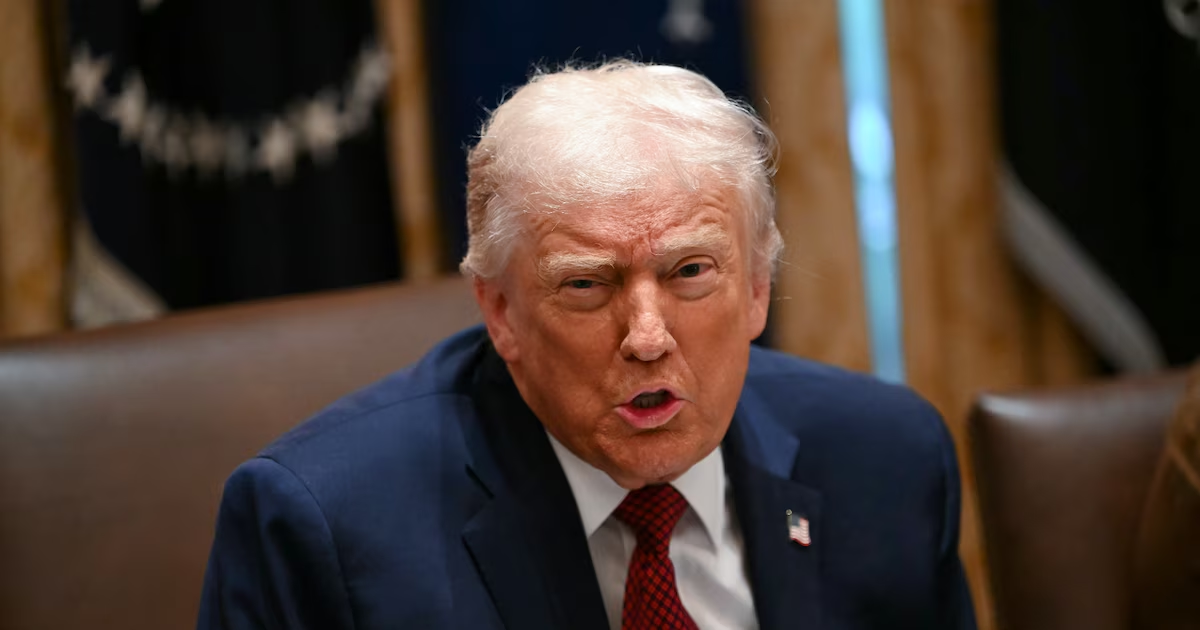
Former U.S. President Donald Trump has sparked major controversy after making bold statements about the Washington Peace Agreement related to the conflict between the Democratic Republic of Congo (RDC) and Rwanda. Trump emphasized that the United States lacks the critical raw materials needed for battery production—resources essential for the global energy transition.
Trump: “For Batteries, We Must Go to Congo”
During his remarks, Trump explained that the U.S. has vast reserves of oil and gas but insufficient access to crucial minerals such as cobalt, lithium, and nickel—all vital for electric vehicle batteries and renewable energy technologies.
He stated:
“We don’t have raw materials for batteries… Let’s move to batteries, or else we must go to Congo and get it from China.”
This highlights Congo’s strategic importance, as the country holds more than 70% of the world’s cobalt reserves.
“I Ended the War Between Congo and Rwanda”
Trump went further, asserting that he personally played a major role in stopping the conflict between the two nations. :
“I ended the war between Congo and Rwanda, and they told me, ‘Please, please, we would be happy for you to come take our minerals.’”
These comments immediately triggered debate, suggesting an implicit agreement involving access to Congo’s mineral wealth.
Geopolitical and Economic Implications
Trump’s statements raise key questions:
-
What was the actual U.S. role in mediating between RDC and Rwanda?
-
Will Congolese minerals become part of future strategic deals between Washington and Kinshasa?
-
How might this affect the cobalt, copper, and lithium industries in the region?
Analysts warn that these declarations may influence power dynamics in the Great Lakes region, already fragile due to competition over natural resources.
A Statement That Ignites Global Debate
By linking peace efforts in Central Africa with the global shift toward battery technologies, Trump puts the DR Congo at the center of U.S. strategic interests.
Some observers say Trump is merely exposing a long-standing reality: major powers depend on Africa’s minerals.
Others view his statement as a controversial interference that could intensify diplomatic tensions.
Joshmishumbi