

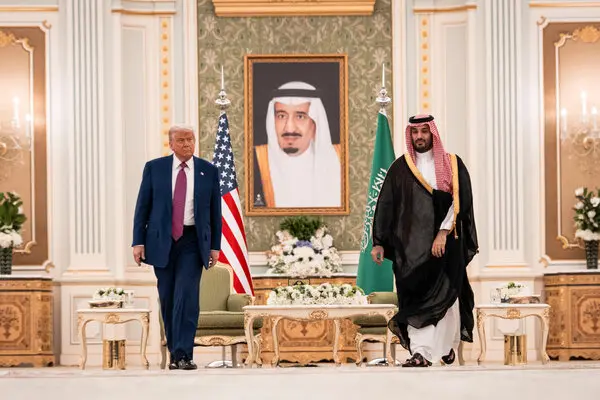
Saudi Arabia’s Crown Prince, Mohammed bin Salman (MBS), is scheduled to meet U.S. President Donald Trump at the White House on November 18.
This high-level visit is widely seen as a potentially significant moment for reshaping military and diplomatic alliances in the Middle East.
A Potential Defense Pact Under Discussion
One of the central topics expected to be discussed is the possibility of a formal U.S.–Saudi defense pact.
Such an agreement would significantly deepen military cooperation between Washington and Riyadh, providing Saudi Arabia with explicit U.S. security guarantees in the event of regional aggression.
In exchange, the United States is likely to seek stronger Saudi commitments to help stabilize the Middle East, particularly in countering perceived threats from Iran.
Abraham Accords Back in Focus
The meeting is also expected to touch upon a sensitive issue: the potential normalization of relations between Saudi Arabia and Israel, within the broader framework of the Abraham Accords.
Under the Trump administration, several Arab states — including the UAE, Bahrain, Morocco, and Sudan — signed landmark normalization agreements with Israel.
A Saudi decision to join the process would represent a historic shift, with far-reaching implications for regional geopolitics.
Major Economic and Energy Stakes
Beyond security matters, the two leaders are expected to discuss:
-
energy cooperation,
-
cross-investment in technology and infrastructure,
-
and joint efforts to stabilize the global oil market.
Economic relations remain a core pillar of U.S.–Saudi ties, especially amid continued volatility in global oil prices.
A Meeting Rich in Symbolism and Consequences
MBS’s visit comes at a crucial moment, as the United States seeks to reinforce its alliances across the Middle East, while Saudi Arabia pursues diplomatic diversification and strengthens its regional leadership.
The outcome of this meeting could significantly influence:
-
the future of U.S.–Saudi relations,
-
Gulf regional security,
-
and the ongoing normalization process between Arab states and Israel.
Joshmishumbi