

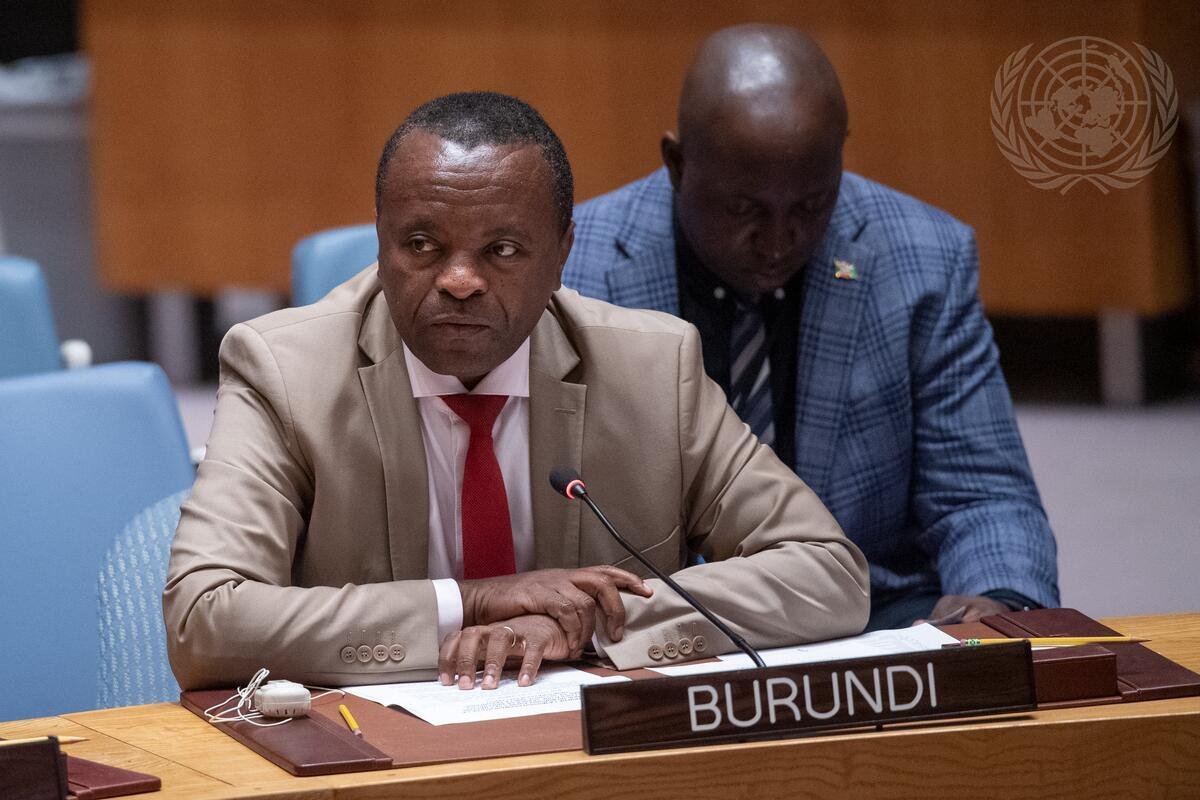
At the United Nations Security Council, Burundi issued a firm warning to Rwanda following the December 4 bombardments that struck the commune of Chibitoke, injuring a woman and a child.
Bujumbura described the incident as a “serious act of provocation” and denounced what it called Kigali’s “belligerent attitude.”
Speaking before the Council, Burundi’s representative stressed the gravity with which his country views the attack.
“Burundi wishes to inform this august Council that it has taken very seriously the message sent by bombs launched from Rwanda on December 4 onto Burundian soil, in the commune of Chibitoke, injuring a woman and a child. We consider this act a serious provocation and a manifestation of a belligerent attitude, which we strongly condemn. Let me be clear: restraint has its limits.”
The Burundian diplomat warned that continued attacks could lead to a dangerous escalation between the two neighboring countries.
“If these irresponsible attacks were to continue, it would become extremely difficult to avoid a direct escalation between our two countries. Burundi cannot tolerate repeated violations of its territorial integrity and reserves the right to exercise self-defense, in accordance with Article 51 of the United Nations Charter.”
A Call for International Attention
While reaffirming its commitment to regional peace and security, Burundi made it clear that it would not remain passive in the face of repeated provocations.
“Burundi remains a reliable partner for regional peace and security. Having defended civilian populations with professionalism in all missions where it has been deployed, Burundi cannot stand idly by in the face of provocations and violations of its territorial integrity,” the representative added.
By positioning itself as a responsible actor committed to peace, Bujumbura nevertheless emphasized that it ‘will not fold its arms’ in response to attacks targeting its population.
Rising Tensions in the Great Lakes Region
This statement places Rwanda under direct diplomatic pressure and serves as a clear warning to the international community about the risk of a broader escalation in the Great Lakes region if tensions continue to rise.
The Security Council is now urged to closely monitor the situation, as the incident highlights growing instability and the potential for conflict between two key regional actors.
Joshmishumbi