

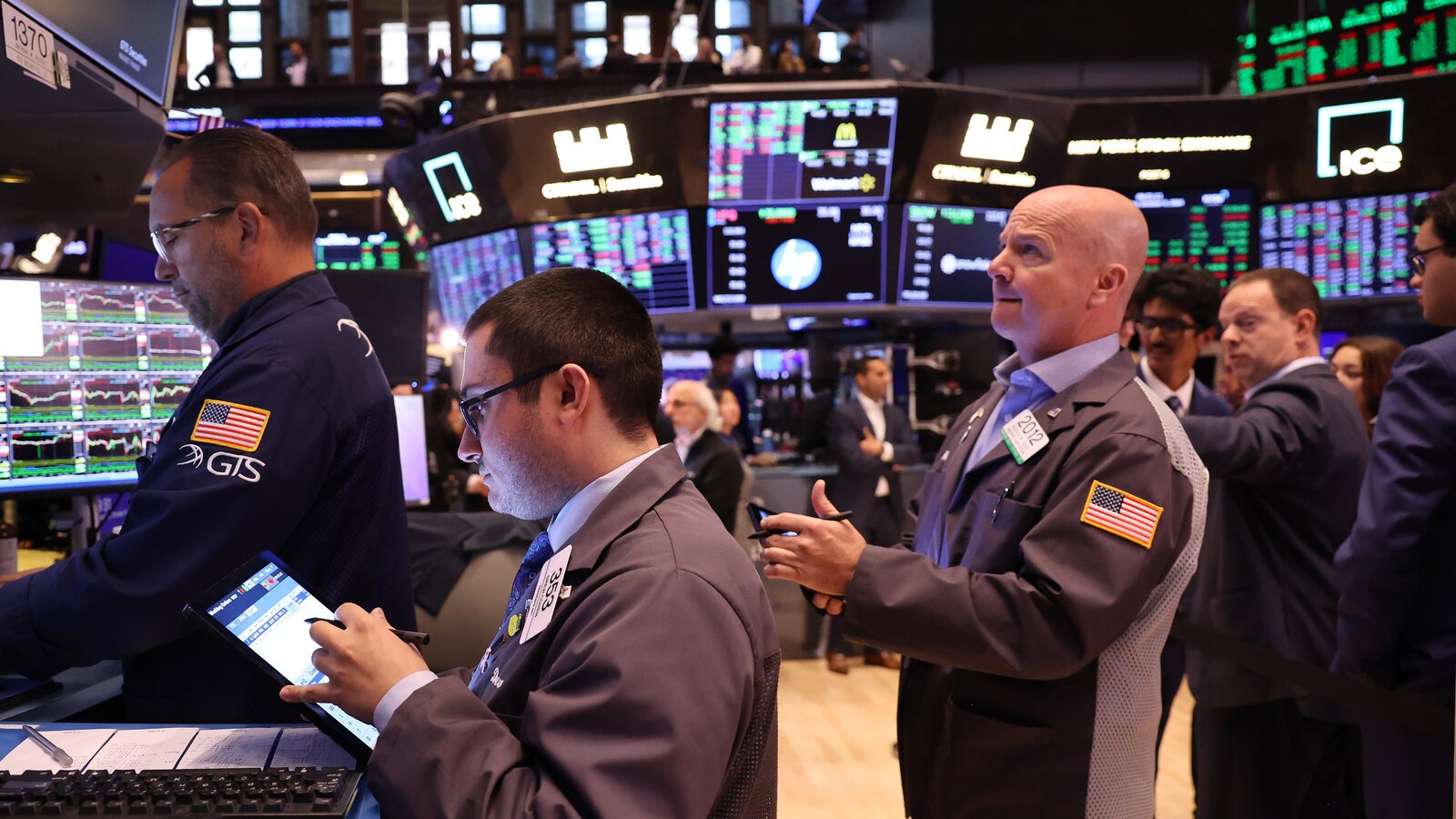
Wall Street closed lower on Thursday, as growing fears of an artificial intelligence (AI) bubble combined with persistent inflation concerns pushed investors to reduce risk exposure.
Major U.S. stock indexes retreated, led by losses in technology and growth stocks, signaling renewed caution across global financial markets.
Tech Stocks Drag Markets Down
The Nasdaq Composite and the S&P 500 ended the session in negative territory, weighed down by sharp declines in AI-related and semiconductor stocks. Investors reacted nervously to weaker-than-expected outlooks from key tech companies, reigniting fears that AI valuations may have surged too far, too fast.
Market analysts noted that after months of strong gains driven by AI optimism, traders are now questioning whether earnings growth can justify current stock prices.
Inflation Remains a Major Concern
Beyond AI concerns, inflation worries continue to pressure Wall Street. Recent economic data suggested that price pressures remain stubborn, raising doubts about the pace of future interest-rate cuts by the U.S. Federal Reserve.
Higher inflation expectations typically reduce investor appetite for risk, as elevated interest rates can hurt corporate profits and slow economic growth. As a result, many investors rotated out of high-growth stocks and into safer assets.
Investor Sentiment Turns Cautious
Market sentiment shifted notably toward caution, with increased volatility observed throughout the trading session. Defensive sectors such as consumer staples and utilities performed relatively better, while technology and communication services led the losses.
According to market strategists, investors are increasingly focused on preserving capital amid uncertainty over inflation, monetary policy, and the sustainability of the AI-driven market rally.
Global Markets Feel the Impact
The downturn on Wall Street also affected global markets, as U.S. equities often set the tone for international trading. Asian and European markets showed mixed performances, reflecting uncertainty over U.S. economic direction and global financial stability.
Outlook: Volatility Likely to Persist
Looking ahead, analysts warn that market volatility could remain elevated as investors closely monitor upcoming inflation data, Federal Reserve signals, and corporate earnings reports. Any indication of prolonged high interest rates or slowing AI growth could further weigh on stock prices.
For now, Wall Street appears to be entering a phase of consolidation, as optimism gives way to realism and risk reassessment.
Joshmishumbi